
Starting an online boutique is less about putting as many products as possible on a website and more about making a clear promise to a particular customer. The strongest first collections feel edited: a shopper can immediately understand the mood, the problem being solved and why the pieces belong together. Build that clarity before you spend heavily on stock, photography or promotion.
1. Start with the customer, not the product list
“Women who like fashion” is too broad to guide a buying decision. Begin with a real customer and a real moment in her life. She might be looking for polished work layers that are not stiff, easy outfits for a changing body, or giftable accessories that make everyday style feel finished. The narrower description is not a limitation. It gives you a useful filter for every product, photo and message that follows.
Write one sentence that describes who the boutique is for, what she is trying to feel or solve, and what you will curate for her. Then create a short list of the places she shops now. Look at the product mix, price range, delivery expectations, photography and customer questions. The point is not to copy anyone. It is to find a gap you can serve with a more specific point of view.
The U.S. Small Business Administration’s market research guidance is useful here because it turns taste into evidence. In fashion, a good eye without a customer lens can quickly become an expensive wardrobe rather than a coherent shop.

2. Make a simple plan for the first 90 days
You do not need a large formal document to launch thoughtfully. You do need enough clarity to decide what to buy, what to charge and how you will know whether the first collection is working. The SBA notes that a lean plan can be a concise, high-level document; for a first boutique launch, that is often the right level of detail.
Cover five things: your customer and point of view, your opening assortment, the expected cost of inventory and operations, the sales target needed to keep buying, and a launch calendar. Add a modest reorder plan. A new store does not need every category on day one. It needs a focused collection that can teach you what to repeat, what to refine and what to leave behind.
List costs honestly. Inventory is only part of the picture. Include packaging, shipping supplies, product photography, selling fees, software, returns and a small buffer for fixes. The SBA’s startup-cost guidance is useful because it separates online-business expenses from other kinds of businesses. That keeps the first budget grounded in the work an online boutique actually has to do.
Set a review date before you launch. At 30 days, look at what customers viewed, added to a basket, asked about and actually bought. At 60 and 90 days, compare those signals with your original plan. This helps you distinguish a product that needs better presentation from a product that simply does not belong in the assortment. It also keeps a first collection from becoming a permanent commitment just because you paid for it.
3. Put the business basics in order early
Business registration, tax and permit requirements vary by location and business structure, so this is not a place to guess. Make a checklist for your state and local requirements before you open orders. The federal state tax directory can help you find the right local agency, and a qualified local adviser can tell you which rules apply to the way you plan to sell.
If your setup requires an Employer Identification Number, use the official IRS process. The IRS says its online application is free, and it warns against services that charge for an EIN. Keep confirmation letters, resale certificates, supplier records and sales-tax paperwork in one organized place from the start. Good records make reorders, reporting and partnerships easier later.
Also set the customer-facing ground rules before launch: shipping timing, returns, exchanges, damaged-item handling and how customers can reach you. Clear policies do not make a boutique feel less personal. They make a personal business easier to trust.
4. Source a small collection with a clear job for every piece
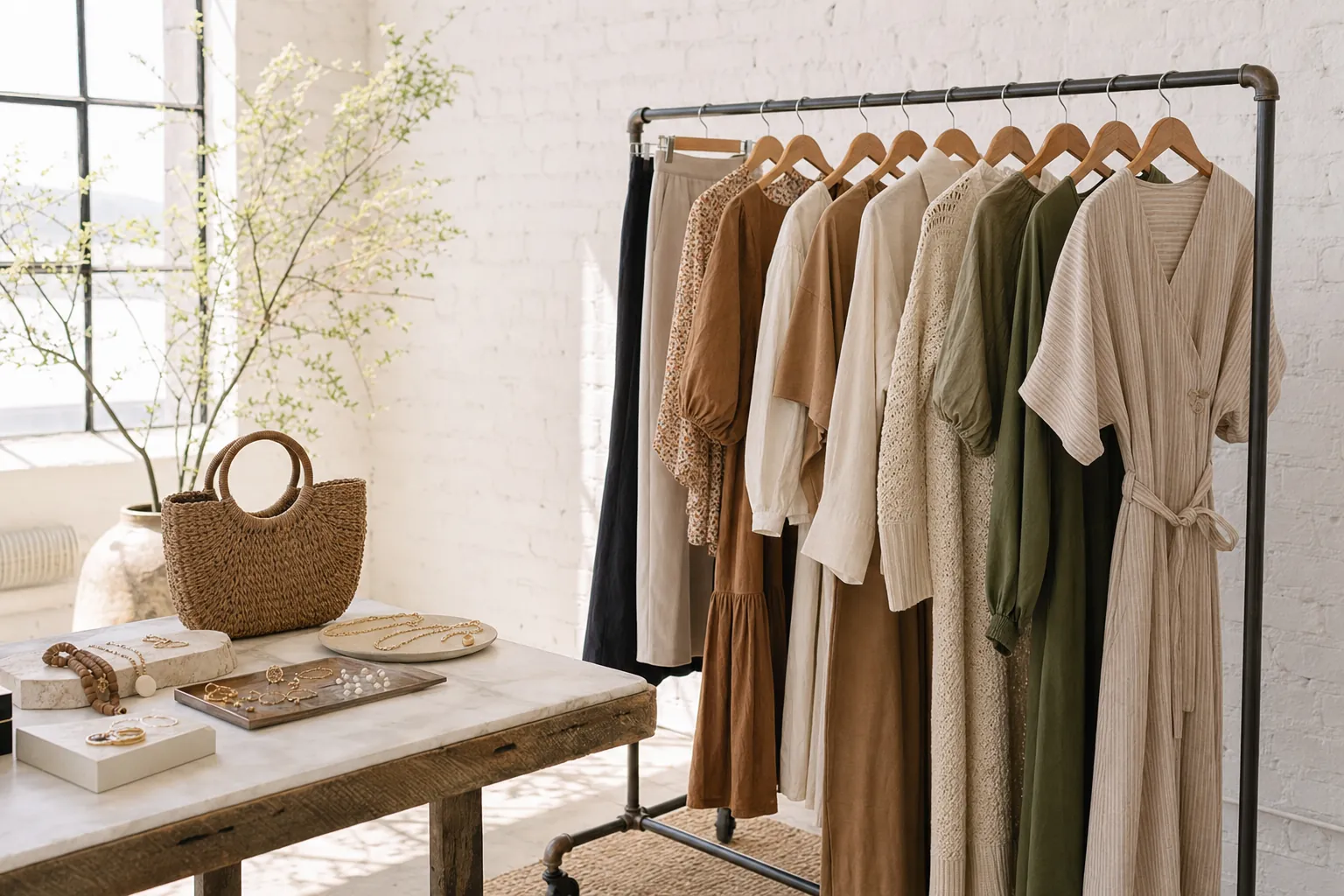
When you source inventory, ask whether each item helps the customer build an outfit or solves a reason to shop. A useful opening mix may include dependable layers, a few more expressive pieces and accessories that help customers complete the look. Avoid buying ten versions of the same idea simply because they are available. Variety should make the assortment more useful, not harder to understand.
Before you commit to a supplier, check the practical details: product quality, size range, lead times, order minimums, availability for reorders, price consistency and return terms. Request samples when possible. A product that photographs well but arrives poorly finished can cost more in returns and trust than it saved on the invoice.
Wholesale is often a sensible place to begin because it lets a boutique curate an assortment without developing every product from scratch. The first question is not “What is cheapest?” It is “Which supplier lets me serve the customer I described in step one?” A source that reliably offers the right scale, quality and delivery rhythm is more valuable than a one-time bargain.
5. Price for the business you want to keep running
Pricing cannot be decided from the wholesale ticket alone. Start with the landed cost: the item, shipping to you, duties when relevant, packaging and the selling costs connected to that order. Then compare the resulting price with the value the customer sees and the alternatives she is already considering. If the margin disappears after shipping, returns and a promotion, the item is not really priced for a sustainable shop.
Give your collection a price architecture. A few accessible add-ons can help a customer try the brand. Mid-range pieces can carry the everyday wardrobe. Higher-priced items should have an obvious reason for being there, such as material, fit, versatility or a special-occasion role. That structure makes a shop easier to browse and gives you more than one way to build a healthy order.
Do not train new customers to wait for a discount. Use a launch offer only when it has a purpose, such as helping a shopper try a new category or rewarding a complete look. Strong product information and a thoughtful edit are usually better long-term reasons to buy.
It also helps to think in outfits, not only individual products. An accessory may have a lower ticket, but it can increase the usefulness of a dress or knit and make the final order feel more complete. Plan those relationships when buying. A collection that naturally gives customers a second or third item to consider is usually more useful than one made of unrelated “best sellers.”
6. Build product pages that answer the question behind the question
Online shoppers cannot touch the fabric, try the fit or ask a sales associate to compare options. Your product pages have to do that work. Lead with images that make the item easy to inspect, then write descriptions that answer how it fits, where it works, what it feels like and how it can be styled. Include measurements and care guidance when they will prevent confusion.
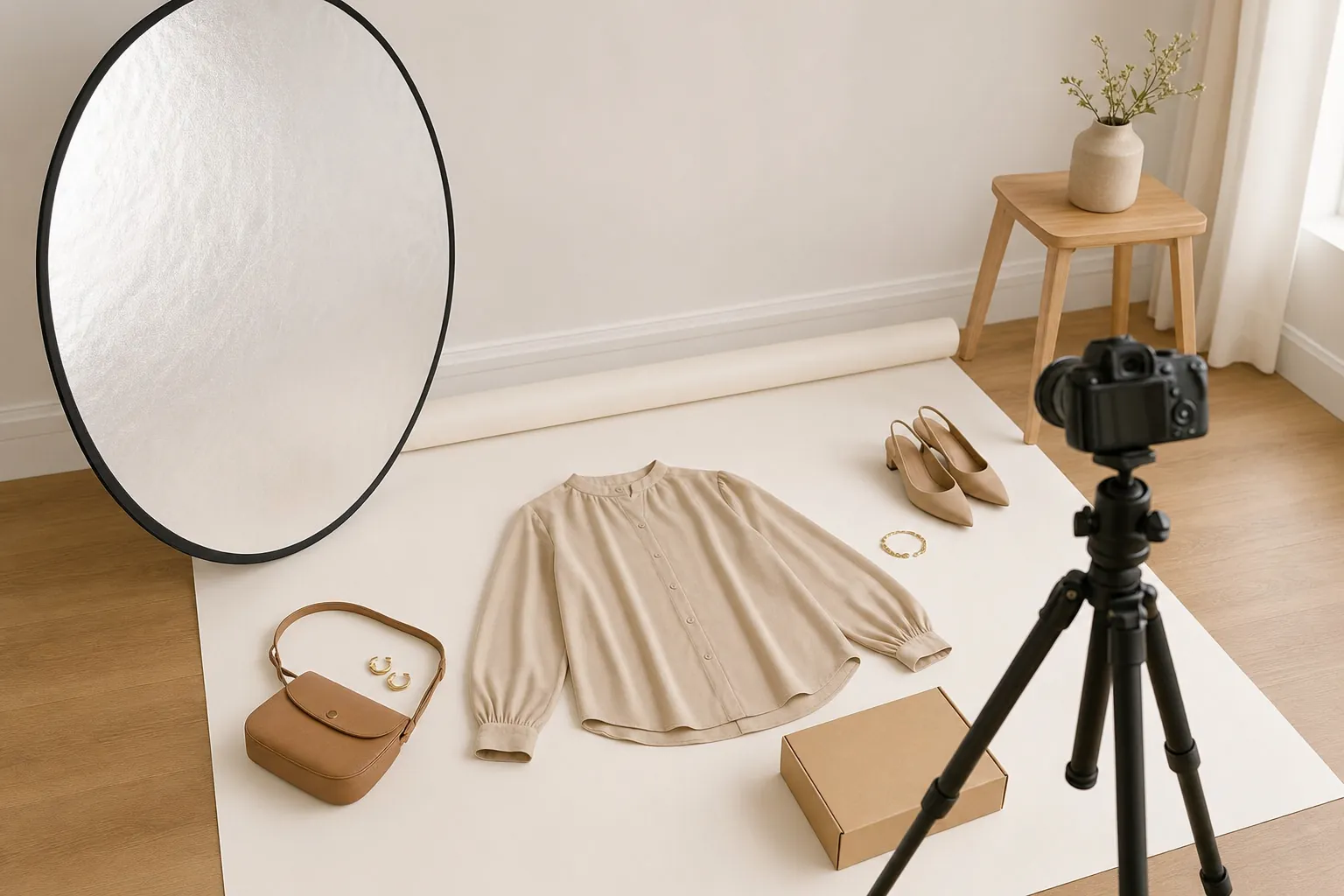
Photograph each item consistently. Use the same light, image rhythm and level of detail across the collection. Include the front and back, close details, a true sense of scale and styling ideas where possible. A clean visual standard makes a smaller assortment feel considered rather than sparse.
Your collection page should also help visitors move between categories naturally. A customer looking at a sweater may appreciate a crossbody or bracelet that completes the outfit. This is not about crowding every page with suggestions. It is about making the curation useful.
Use the same language shoppers use when they ask a friend for advice. “Lightweight enough for warm offices,” “easy over a simple tank,” or “a compact bag that still fits the essentials” is more useful than a generic claim that an item is beautiful or high quality. Honest detail helps the right customer say yes and helps the wrong customer decide before a return becomes necessary.
7. Launch with a reason to come back
A launch is the start of the relationship, not the finish line. Give people a simple reason to pay attention: a small edit built around a season, a useful style story, a first-access list or a carefully timed new arrival. Show the products in context rather than posting isolated catalogue images over and over. People remember an outfit idea and a feeling more readily than a stock number.
Pay close attention to the questions customers ask before they buy. Are they asking about fit, shipping, colour or how to wear something? Those questions reveal what your product pages, social posts and next buying decisions need to explain better. The first few weeks are a learning period. Let customer behaviour shape the next order instead of relying only on what you personally hoped would sell.
Make support easy to find from day one. A visible contact path, straightforward policies and a prompt human response are part of the product experience. They are particularly important for a new boutique that has not yet earned repeat trust.
Keep a short weekly merchandising note while you are learning. Record the pieces customers style together, the colours they ask for and the objections that stop a sale. Those notes become far more useful than a general feeling about how launch week went. They help you choose the next product story, plan a reorder and write a clearer product page without having to start from zero each time.
How Jones & Ivy can help you source the opening edit
For boutique owners ready to source a contemporary mix of women’s apparel, accessories, footwear, baby and maternity pieces, Jones & Ivy Collections, Inc. offers a wholesale collection through Faire. The catalogue is designed for buyers who want a thoughtful range of everyday pieces and finishing touches without losing the edit that makes their store feel like their own.
Start by reviewing the current wholesale selection, then choose the categories that make the most sense for your customer and launch plan. A smaller order with a clear role in the collection is a stronger beginning than a broad order with no through-line.
A launch checklist worth keeping
- Define one specific customer and the role your boutique plays in her life.
- Set a first collection budget that includes stock, operations and a reorder buffer.
- Confirm your registration, tax and policy requirements for your location.
- Choose suppliers based on fit, quality and reliability, not only unit price.
- Prepare product pages and photographs that make buying online feel less uncertain.
- Launch small enough to learn, then use real customer feedback to guide the next edit.
Frequently asked questions
How much inventory should I buy for a new online boutique?
Start with an amount you can afford to test and replenish. A tight, intentional assortment gives you a clearer read on what customers actually want than a large first order spread across too many ideas.
Do I need an EIN to start an online boutique?
Your exact requirements depend on your business structure and location. The IRS explains when an EIN is needed and provides the official application process. Check your state and local requirements as part of your launch plan.
Where can a boutique find wholesale inventory?
Wholesale marketplaces and direct brand relationships can both work well. Focus on suppliers whose quality, ordering terms, delivery reliability and assortment fit the customer you want to serve.
Should I launch with clothing, accessories or both?
Choose the mix that makes your point of view easiest to understand. Accessories can make a focused clothing edit feel more complete, while a smaller collection is usually easier to photograph, merchandise and reorder well.